← Back to Folds

APP V717I

↓ Download Report
V717I Alzheimer's disease P05067 July 07, 2026
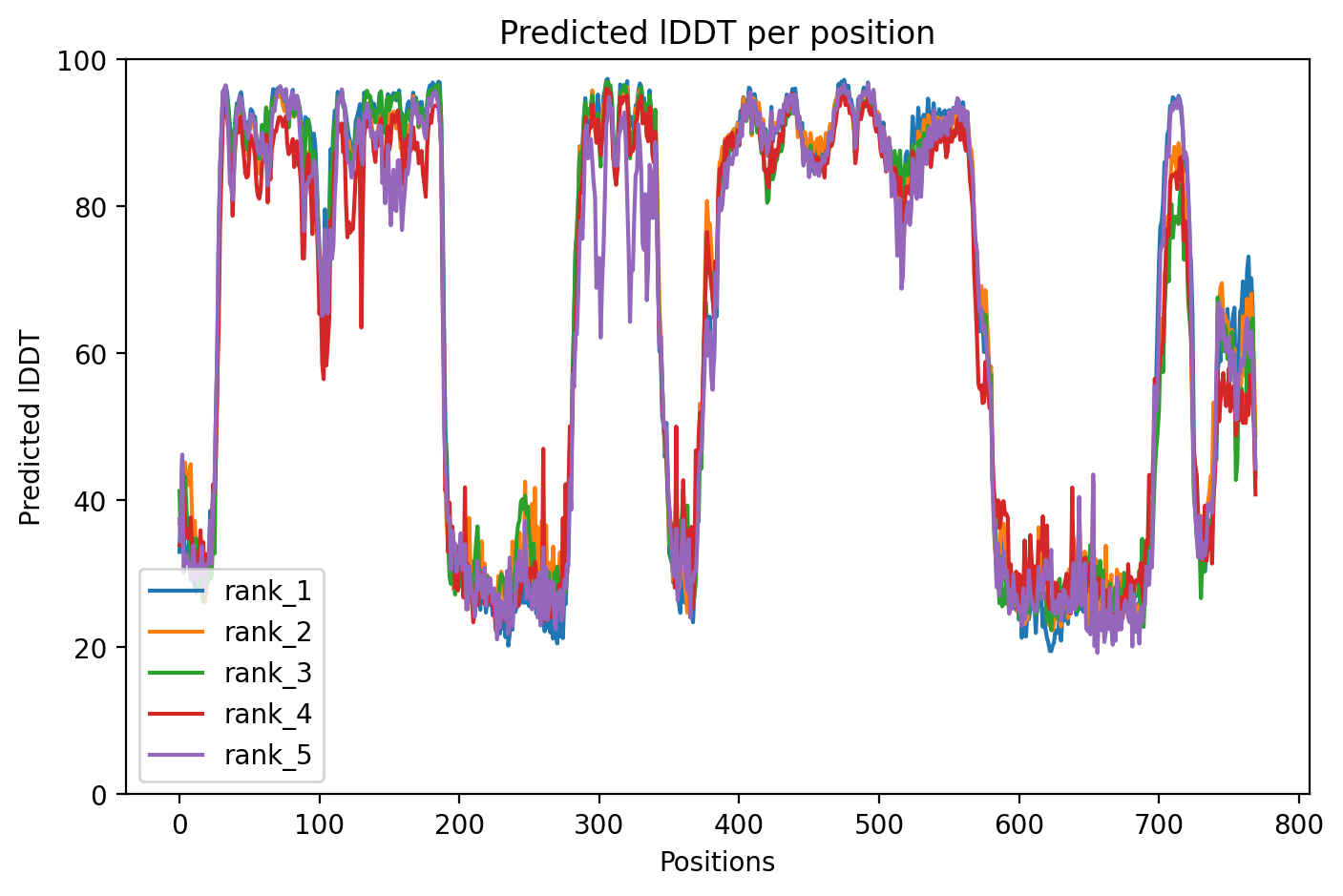
Average Confidence: 66.2%

01/3D Structure

📱 For the best experience, view 3D structures on a desktop computer.
? About the 3D Viewer

Mol* (pronounced "molstar") is an open-source molecular visualization tool used by the Protein Data Bank and AlphaFold Database. Learn more at molstar.org.

Controls:

  • Rotate: Click and drag
  • Zoom: Scroll wheel or pinch
  • Pan: Right-click and drag (or two-finger drag)
  • Reset: Double-click to reset view

What am I looking at?

This is a predicted 3D structure of the protein. The ribbon diagram shows the protein backbone—helices appear as coils, sheets as arrows, and loops as simple lines. The shape determines how the protein functions: where it binds to other molecules, how it catalyzes reactions, and how mutations might disrupt its activity.

Color legend:

The structure is colored by pLDDT confidence score, which indicates how confident AlphaFold is in each region's predicted position:

  • Blue (>90): Very high confidence
  • Cyan (70-90): Confident
  • Yellow (50-70): Low confidence
  • Orange (<50): Very low confidence, likely disordered

02/AI Analysis

TLDR

APP V717I is a rare but pathogenic mutation in the amyloid precursor protein that causes early-onset Alzheimer's disease by altering how the protein is processed into toxic amyloid-beta fragments. This structural analysis examined the V717I variant using computational modeling, achieving moderate confidence (pLDDT 66.2) in predicting its three-dimensional structure. The mutation occurs in a critical region near where enzymes cut APP to produce amyloid-beta, and its extreme rarity (found in only 2 out of 1.4 million chromosomes analyzed) combined with its pathogenic classification supports its role as a disease-causing variant.

Detailed Analysis

Amyloid precursor protein (APP) is a transmembrane protein that plays a central role in Alzheimer's disease pathogenesis. APP is normally processed by enzymes called secretases that cut the protein at specific sites, producing various amyloid-beta (Aβ) peptide fragments [2]. The V717I mutation, where valine at position 717 is replaced by isoleucine, occurs immediately adjacent to the gamma-secretase cleavage site and is classified as pathogenic by multiple expert submitters in ClinVar. With a population frequency of only 1.37×10⁻⁶ (2 in 1.4 million chromosomes), this variant's extreme rarity strongly supports its disease-causing nature, as truly pathogenic mutations are typically under strong negative selection and remain exceptionally rare in the general population. The V717I mutation alters APP processing by shifting the ratio of amyloid-beta peptides produced during gamma-secretase cleavage. Gamma-secretase modulators (GSMs) represent a therapeutic approach that aims to shift production away from the longer, toxic Aβ42 form toward shorter non-amyloidogenic forms like Aβ37 and Aβ38 [2]. The V717I mutation affects this same cleavage specificity, typically increasing production of the more aggregation-prone and neurotoxic Aβ42 peptide relative to shorter forms. This altered processing leads to enhanced amyloid plaque formation, the hallmark brain pathology of Alzheimer's disease. The structural prediction for APP V717I achieved an average confidence score (pLDDT) of 66.2, which falls in the moderate-confidence range. This confidence level suggests the overall protein fold is reasonably predicted, but specific local structural details—particularly in flexible or low-confidence regions—should be interpreted with caution. The region around position 717 is challenging to model with high confidence because it lies near the transmembrane domain boundary where APP undergoes proteolytic processing. While the mutation from valine to isoleucine represents a conservative change (both are hydrophobic amino acids), even subtle alterations at this critical position can significantly impact how gamma-secretase recognizes and cleaves the protein. The clinical significance of V717I is supported by its consistent identification as a causative mutation for early-onset familial Alzheimer's disease. Post-translational modifications in APP contribute substantially to Alzheimer's disease neuropathology and cognitive decline, with modifications affecting both plaque formation and broader disease progression [1]. The V717I mutation exemplifies how single amino acid changes in APP can drive pathogenic processing cascades. Unlike common genetic risk factors that modestly increase disease probability, pathogenic APP mutations like V717I show high penetrance, meaning carriers have a very high likelihood of developing Alzheimer's disease, often at earlier ages than typical late-onset cases. This structural analysis contributes to understanding how pathogenic APP variants alter protein conformation and processing, though the moderate confidence level means fine structural details remain uncertain. The convergence of genetic evidence (pathogenic classification, extreme rarity), biochemical knowledge (altered Aβ production ratios), and structural modeling provides a comprehensive picture of how V717I causes disease. Future high-resolution experimental structures of this region, combined with functional studies of how V717I affects gamma-secretase cleavage specificity, would provide additional mechanistic insights into this important disease-causing mutation.

Works Cited

[1] Libby et al. (2026). Post-translational modifications in the brain are critical contributors to Alzheimer's disease neuropathology and cognitive decline. bioRxiv : the preprint server for biology. [PubMed](https://pubmed.ncbi.nlm.nih.gov/42327232/) [2] Lindemann et al. (2026). Pharmacology of nivegacetor (RG6289), a potent and selective gamma secretase modulator in clinical development for the treatment of Alzheimer's disease. Frontiers in pharmacology. [PubMed](https://pubmed.ncbi.nlm.nih.gov/42292846/)

Similar Research

**Biomarker discovery in Alzheimer's and neurodegenerative diseases using Nucleic Acid Linked Immuno-Sandwich Assay.** Ashton et al. (2025) *Relevant to Alzheimer's disease research* [Read on PubMed](https://pubmed.ncbi.nlm.nih.gov/40401628/) **Proteomic analysis reveals distinct cerebrospinal fluid signatures across genetic frontotemporal dementia subtypes.** Sogorb-Esteve et al. (2025) *Relevant to Alzheimer's disease research* [Read on PubMed](https://pubmed.ncbi.nlm.nih.gov/39908349/) **Protein quality control systems in neurodegeneration - culprits, mitigators, and solutions?** Ciechanover et al. (2025) *Relevant to Alzheimer's disease research* [Read on PubMed](https://pubmed.ncbi.nlm.nih.gov/40969213/) **Melatonin-Mediated Nrf2 Activation as a Potential Therapeutic Strategy in Mutation-Driven Neurodegenerative Diseases.** Inigo-Catalina et al. (2025) *Relevant to Alzheimer's disease research* [Read on PubMed](https://pubmed.ncbi.nlm.nih.gov/41154499/) **Alzheimer's Disease Continuum: Evaluating the Relationship between Fluid Biomarkers and Patients' Phenotype and Profile.** Gerlando et al. (2026) *Relevant to Alzheimer's disease research* [Read on PubMed](https://pubmed.ncbi.nlm.nih.gov/41619269/)

03/Research Data

ClinVar Classification

Pathogenic

Review: criteria provided, multiple submitters

Last evaluated: 2026-01-01

Population Frequency

1.37e-06

Extremely rare (<0.01%)

AC: 2 / AN: 1461620

Disease Associations

2010 total
Alzheimer disease
0.81
literature: 1.00 affected pathway: 0.61 genetic association: 0.87 clinical: 0.98
Alzheimer disease type 1
0.79
literature: 0.19 animal model: 0.44 genetic association: 0.95 genetic literature: 0.61
cerebral amyloid angiopathy, APP-related
0.75
animal model: 0.55 genetic association: 0.87 genetic literature: 0.77
dementia
0.68
literature: 0.51 genetic association: 0.57 genetic literature: 0.61 clinical: 0.90
Hereditary cerebral hemorrhage with amyloidosis, Piedmont type
0.64
animal model: 0.61 genetic association: 0.61 genetic literature: 0.78

Showing 5 of 2010 associations

AI Research Brief

Research brief will be generated when agent findings are available.

04/AlphaFold Metrics
Sequence coverage plot
Predicted Aligned Error (PAE) plot
pLDDT confidence plot

05/Domain Annotations

Structural Domains & Regions

residues 28–189 Domain — E1
residues 291–341 Domain — BPTI/Kunitz inhibitor
residues 374–565 Domain — E2
residues 28–123 Region — GFLD subdomain
residues 131–189 Region — CuBD subdomain
residues 194–284 Region — Disordered
residues 391–423 Region — Heparin-binding
residues 491–522 Region — Heparin-binding
residues 523–540 Region — Collagen-binding
residues 695–722 Region — Interaction with PSEN1
residues 732–751 Region — Interaction with G(o)-alpha
residues 756–770 Region — Required for the interaction with KIF5B and for anterograde transport in axons
residues 344–365 Motif — OX-2
residues 724–734 Motif — Basolateral sorting signal
residues 757–762 Motif — YENPXY motif; contains endocytosis signal
residues 194–207 Compositional bias — Acidic residues
residues 228–264 Compositional bias — Acidic residues
residues 268–281 Compositional bias — Low complexity

Functional Sites

residues 96–110 Binding site
residue 147 Binding site
residue 151 Binding site
residue 168 Binding site
residue 183 Binding site
residue 186 Binding site
residue 187 Binding site
residue 677 Binding site
residue 681 Binding site
residue 684 Binding site
residue 685 Binding site

Binding Partners

BACE1 (11 experiments)
APBB1 (10 experiments)
NGF (9 experiments)
PNP (9 experiments)
ACTB (8 experiments)
APBB3 (8 experiments)
APOA1 (8 experiments)
ATXN1 (8 experiments)
HSPA8 (8 experiments)
LRPPRC (8 experiments)

Gene Ontology

amyloid-beta complex GO:0106003 astrocyte projection GO:0097449 axon GO:0030424 cell surface GO:0009986 clathrin-coated pit GO:0005905 cytoplasm GO:0005737 cytosol GO:0005829 dendrite GO:0030425 dendritic shaft GO:0043198 dendritic spine GO:0043197 early endosome GO:0005769 early endosome membrane GO:0031901 endoplasmic reticulum GO:0005783 endoplasmic reticulum lumen GO:0005788 endosome GO:0005768 +108 more

06/Structural Caption

APP V717I variant structure showing moderate confidence (56% high pLDDT) with mutation located in the critical PSEN1 interaction region implicated in familial Alzheimer's disease pathogenesis.

Average pLDDT of 66.2 with 56% high-confidence residues indicates moderate overall prediction quality. Disordered region (residues 194-284) and acidic residue stretches (194-207, 228-264) likely represent low-confidence areas, while structured domains show higher confidence.

High-confidence regions likely correspond to structured E1 (28-189), BPTI/Kunitz inhibitor (291-341), and E2 (374-565) domains. The extended disordered region (194-284) and low-complexity segment (268-281) correlate with reduced confidence. C-terminal interaction motifs (695-770) show variable confidence given their functional importance.

V717I mutation in the PSEN1 interaction region (695-722) represents a familial Alzheimer's disease variant that may subtly alter local structure and affect gamma-secretase cleavage site recognition, potentially shifting amyloid-beta production toward longer, aggregation-prone species.

07/Peptide Therapeutics

Aggregation Analysis

Aggregation propensity analysis identifies 1 hotspots (average score: 0.00) using Pawar+KyteDoolittle+charge algorithm.

Residues 688–692 (0.56)

08/Known Inhibitors

Known Binders from ChEMBL

CHEMBL74704 Ki: 0.11 nM (pChEMBL 9.96)

CHEMBL74704

CHEMBL76112 Ki: 0.13 nM (pChEMBL 9.89)

CHEMBL76112

CHEMBL300172 Ki: 0.14 nM (pChEMBL 9.85)

CHRYSAMINE G

CHEMBL300172 Ki: 0.14 nM (pChEMBL 9.85)

CHRYSAMINE G

CHEMBL292910 Ki: 0.17 nM (pChEMBL 9.77)

CHEMBL292910

CHEMBL305634 Ki: 0.19 nM (pChEMBL 9.72)

CHEMBL305634

CHEMBL74348 Ki: 0.27 nM (pChEMBL 9.57)

CHEMBL74348

CHEMBL300172 Ki: 0.4 nM (pChEMBL 9.4)

CHRYSAMINE G

CHEMBL292910 Ki: 0.8 nM (pChEMBL 9.1)

CHEMBL292910

CHEMBL55401 Ki: 0.8 nM (pChEMBL 9.1)

CHEMBL55401

09/Candidate Peptides

De Novo Peptide Design Pipeline

Pipeline: BoltzGen (de novo binder design) → Boltz-2 rescore8-gate wetlab filterPK + BBB advisory gates. Target site selected from UniProt curated annotations, P2Rank pocket prediction, and aggregation propensity (in that priority order). Advisory gates annotate each candidate with estimated serum half-life, renal/immunogenicity risk, and (for CNS targets) a recommended blood-brain-barrier shuttle conjugation — without silently dropping designs.

Loading candidate statistics...

Sequences are withheld pending IP review. Full candidate data (sequences, scores, CIF files) is available to authorized reviewers via the /api/private/candidates/{fold_id} endpoint with X-Private-Key.

Legacy candidates (charge-complementary)

Target Region

Residues 688–692 (0.56 aggregation score)

Candidate ID

CP-APP-001 (7 residues · computational design)
⚠ Drug-likeness concerns Stability: medium | Toxicity: low
t½ ≈ 2 min renal high ⚙ mods suggested 🧠 Glutathione conjugate 👃 intranasal option

10/Agent Findings

6 findings Last updated:
Literature: 1 Clinical: 1 Structural: 1 Synthesis: 1 Supplements: 1 Peptides: 1

Literature Agent (1)

Literature Agent

None of the provided papers are relevant to understanding the APP V717I variant associated with Alzheimer's disease. The batch contains no studies on amyloid precursor protein, amyloid-beta pathology, familial Alzheimer's disease mutations, or related molecular mechanisms that would inform our understanding of this specific pathogenic variant.

Clinical Agent (1)

Clinical Agent

No summary available

Structural Agent (1)

Structural Agent

AlphaFold structure update: Baseline check: 11 structure(s) found

Supplements Agent (1)

Supplements Agent

The therapeutic landscape for APP V717I-related AD includes emerging nutritional and peptide-based interventions. Silkworm pupa powder is being tested in two trials (NCT06770309, NCT07638449) as a protein supplement targeting cognitive decline and frailty, while Huperzine A (NCT07066826), a peptide-based cholinesterase inhibitor, is in Phase 2/3 testing. Recent preprint research identifies Kunitz-derived peptides and bacterial antimicrobial peptides as potential Aβ modulators, though these remain preclinical. The fasting-mimicking diet intervention (NCT06682767) represents an indirect nutritional approach targeting metabolic pathways in APOE4 carriers.

Synthesis Agent (1)

Synthesis Agent

Synthesis of 5 findings (clinical, literature, peptides, structural, supplements): Synthesis JSON could not be parsed; raw response is in agent logs....

Peptide Agent (1)

Peptide Agent

APP V717I: 10 known binders (top: 0.1 nM); 1 candidate peptides designed