01/3D Structure
? About the 3D Viewer
Mol* (pronounced "molstar") is an open-source molecular visualization tool used by the Protein Data Bank and AlphaFold Database. Learn more at molstar.org.
Controls:
- Rotate: Click and drag
- Zoom: Scroll wheel or pinch
- Pan: Right-click and drag (or two-finger drag)
- Reset: Double-click to reset view
What am I looking at?
This is a predicted 3D structure of the protein. The ribbon diagram shows the protein backbone—helices appear as coils, sheets as arrows, and loops as simple lines. The shape determines how the protein functions: where it binds to other molecules, how it catalyzes reactions, and how mutations might disrupt its activity.
Color legend:
The structure is colored by pLDDT confidence score, which indicates how confident AlphaFold is in each region's predicted position:
- Blue (>90): Very high confidence
- Cyan (70-90): Confident
- Yellow (50-70): Low confidence
- Orange (<50): Very low confidence, likely disordered
02/AI Analysis
TLDR
The P301L mutation in the tau protein is a well-established cause of familial frontotemporal dementia and serves as a critical model for understanding how tau dysfunction contributes to neurodegeneration in Alzheimer's disease and related disorders. This analysis examined the predicted structure of tau carrying the P301L mutation using computational modeling, revealing an average confidence score of 55.0 (on a 0-100 scale), indicating substantial structural uncertainty throughout the protein. The low confidence reflects tau's intrinsically disordered nature, meaning it lacks a stable three-dimensional structure under normal conditions, which is characteristic of this protein family and relevant to understanding how mutations like P301L promote the pathological protein clumping seen in neurodegenerative diseases.
Detailed Analysis
Works Cited
Similar Research
03/Research Data
ClinVar Classification
Review: criteria provided, multiple submitters
Last evaluated: 2026-01-01
Population Frequency
No population data available
Disease Associations
1182 totalShowing 5 of 1182 associations
AI Research Brief
04/AlphaFold Metrics
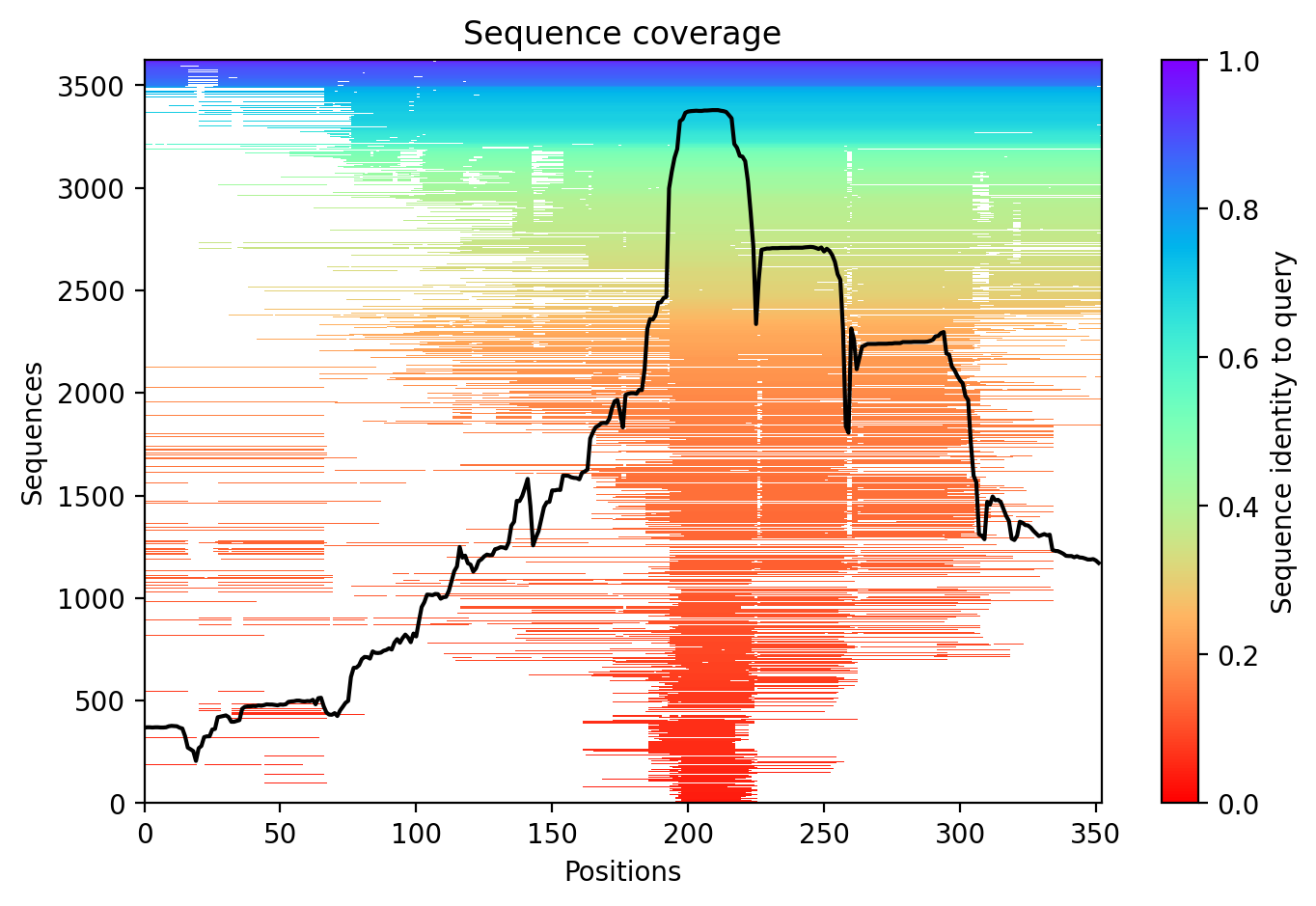

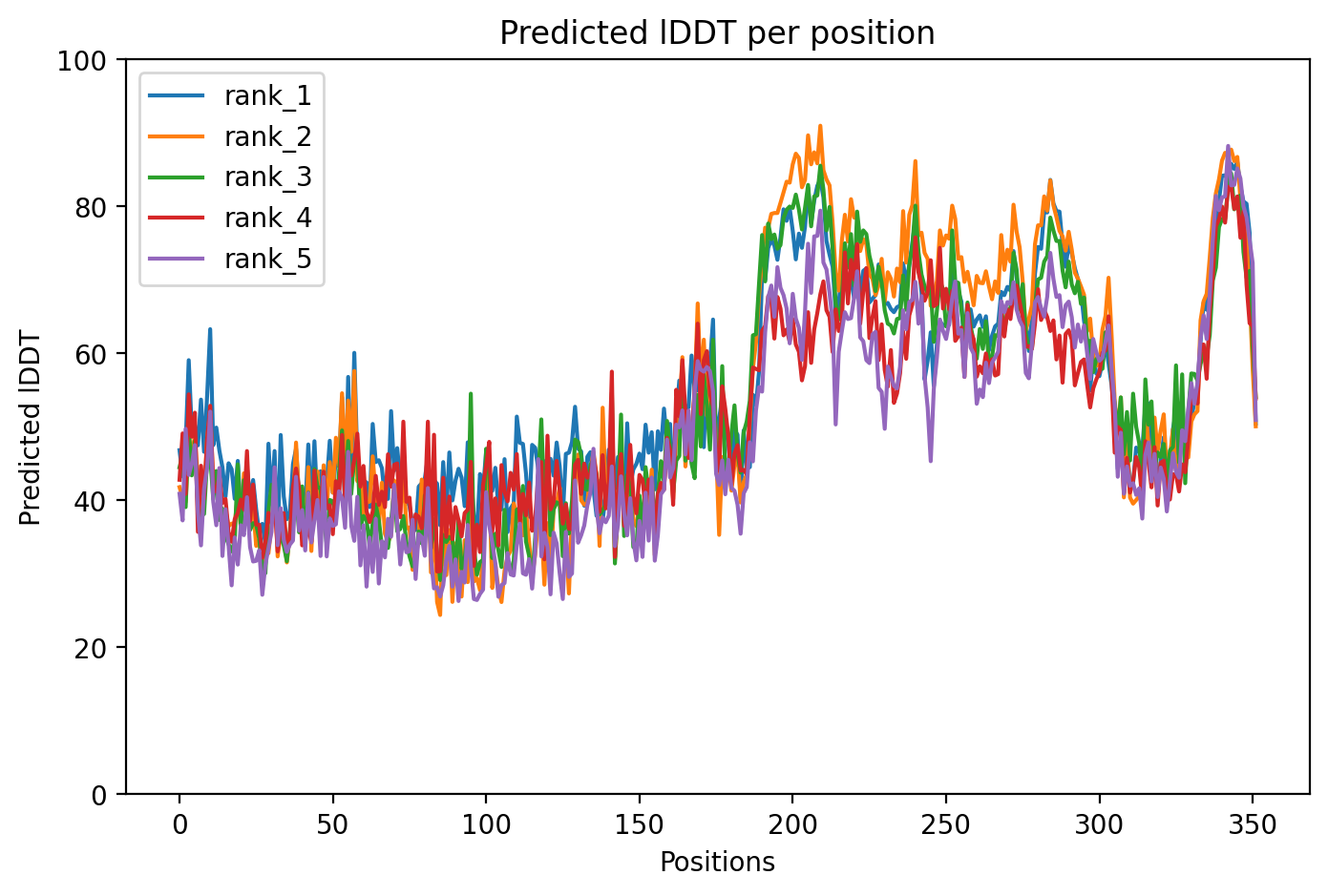
05/Domain Annotations
Structural Domains & Regions
Binding Partners
Gene Ontology
06/Structural Caption
TAU P301L shows intrinsic disorder across most domains (average pLDDT 55.0) except microtubule-binding repeats, reflecting the pathogenic mutation's location in the structured core.
Average pLDDT of 55.0 with only 20% (69/352 residues) achieving high confidence indicates a predominantly disordered structure. The entire N-terminal region (residues 1-560) and C-terminal tail (residues 686-734) show low confidence, consistent with intrinsic disorder.
The four microtubule-binding repeat domains (residues 561-685) represent the only structured regions, though even these show modest confidence scores. The extensive disordered regions (residues 1-573, 715-734) containing multiple low-complexity and charged segments align with the low-confidence predictions, reflecting TAU's intrinsically disordered nature outside the microtubule-binding domain.
The P301L mutation in the microtubule-binding region is associated with frontotemporal dementia and reduces the proline kink that normally modulates microtubule binding affinity. This pathogenic variant may alter local flexibility and promote aggregation propensity in the repeat domain.
07/Peptide Therapeutics
Aggregation Analysis
Aggregation propensity analysis identifies 1 hotspots (average score: -0.19) using Pawar+KyteDoolittle+charge algorithm.
08/Known Inhibitors
Known Binders from ChEMBL
09/Candidate Peptides
De Novo Peptide Design Pipeline
Pipeline: BoltzGen (de novo binder design) → Boltz-2 rescore → 8-gate wetlab filter → PK + BBB advisory gates. Target site selected from UniProt curated annotations, P2Rank pocket prediction, and aggregation propensity (in that priority order). Advisory gates annotate each candidate with estimated serum half-life, renal/immunogenicity risk, and (for CNS targets) a recommended blood-brain-barrier shuttle conjugation — without silently dropping designs.
Loading candidate statistics...
Sequences are withheld pending IP review. Full candidate data (sequences,
scores, CIF files) is available to authorized reviewers via the
/api/private/candidates/{fold_id} endpoint with
X-Private-Key.
Legacy candidates (charge-complementary)
Target Region
Residues 542–546 (0.60 aggregation score)Candidate ID
CP-TAU-001
(7 residues · computational design)
10/Agent Findings
Literature Agent (1)
These papers provide crucial insights into tau P301L/P301S pathophysiology, showing how tau mutations disrupt synaptic function, memory consolidation, and cellular trafficking mechanisms. The findings reveal potential therapeutic targets including kinase inhibitors, membrane fluidity modulators, and sodium channel blockers that could mitigate tau-related neurodegeneration.
Clinical Agent (1)
The P301L mutation in the TAU gene causes tau protein to become hyperphosphorylated and aggregate more readily into neurofibrillary tangles, which are a hallmark pathological feature of Alzheimer's disease and other tauopathies. This mutation accelerates tau pathology progression and neurodegeneration, making it a critical target for therapeutic interventions aimed at preventing tau aggregation or enhancing tau clearance. Clinically, patients with this variant may benefit from early monitoring for cognitive decline and consideration for tau-targeted therapies currently in development.
Structural Agent (1)
AlphaFold structure update: Baseline check: 9 structure(s) found
Supplements Agent (1)
The therapeutic landscape for TAU P301L-related supplements and peptides is very limited, with only two active clinical trials identified. One focuses on nutritional protein supplementation (silkworm pupa powder) while the other tests melatonin as a nutraceutical intervention. Preclinical research shows promise for flavonoid compounds and plant extracts in modulating tau phosphorylation, but these have not yet advanced to clinical testing.
Synthesis Agent (1)
Synthesis of 5 findings (clinical, literature, peptides, structural, supplements): The TAU P301L mutation represents a critical pathogenic variant that fundamentally alters tau protei...
Peptide Agent (1)
TAU P301L: 10 known binders (top: 0.5 nM); 1 candidate peptides designed